
On 13 May 2022, Jubilee secretary general Jeremiah Kioni handed Bahati a nomination certificate at party headquarters. The singer thanked the leadership, predicted he would be Mathare’s next MP and announced, in Kiswahili, that he would not cry that day. The detail about crying made sense to anyone who had seen him in April. The stranger detail was the certificate. Less than three weeks earlier, Bahati had been holding one up while explaining why he feared he might never get to use it.
How a constituency can be spoken for before it votes
Bahati, whose name is Kevin Kioko, had a reason for choosing Mathare that predated both Jubilee and his recording career. He grew up around Mathare and Huruma. In a March interview with his wife, Diana Marua, he recalled being six when his mother died at home. He described the queues families faced trying to get medical attention and linked that experience to his decision to stand. Listeners who knew him from “Mama” had heard a son sing about loss. Now he was identifying a public service he believed had failed families like his.
By April his immediate problem was party arithmetic. Jubilee and ODM belonged to the same broad Azimio coalition. ODM already held Mathare through Anthony Oluoch. Under an arrangement known as zoning, allied parties could leave a constituency to one partner so their candidates would avoid splitting the coalition vote. An aspiring MP could therefore secure the backing of his own party and still find that, one level up, his candidacy had become an inconvenience.
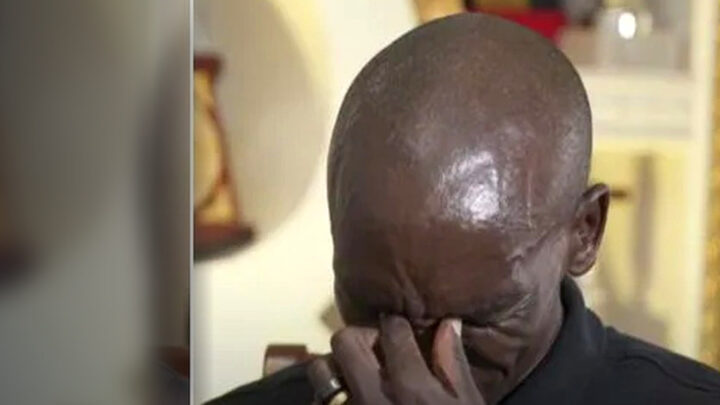
On 25 April, Bahati told reporters he had been asked to give way. He displayed his certificate, wept and appealed for younger Kenyans to be given an opportunity. The tears attracted the attention one would expect when a gospel singer cries in front of television cameras. Behind them was a question that applied equally to a candidate incapable of carrying a tune. What exactly had a party awarded if its coalition partners could still ask for it back?
The two predictions he made in May
When Kioni presented the certificate in May, Citizen Digital reported that Jubilee had reversed the zoning arrangement. Bahati was now making two predictions. He would become the next MP, and the seat would go to Azimio. They may have sounded like different ways to say the same thing during a celebration at Jubilee headquarters. In Mathare they had quite different meanings. Another man in the coalition fully intended to make the second prediction come true.
August supplied the figures. Oluoch took 28,098 votes for ODM. Billian Ojiwa of UDA came second with 16,912. Bahati won 8,166 for Jubilee. He had correctly identified the winning coalition and incorrectly identified its winning candidate. Even if every one of Bahati’s voters had stayed home, Oluoch’s own tally would still have exceeded Ojiwa’s by more than eleven thousand. The vote split that worried coalition planners did not cost their side the seat.
It would be easy to turn third place into a joke about a musician counting followers. That misses both what he accomplished and where he fell short. He forced a party dispute into public view and secured the opportunity to face his neighbours. More than eight thousand chose him in the privacy of a polling booth. Nearly twenty thousand more chose Oluoch. Those residents got to make a decision that, back in April, party officials had been prepared to settle for them. Of the two victories available to Bahati in Mathare, that was the one he won.



Leave a Reply