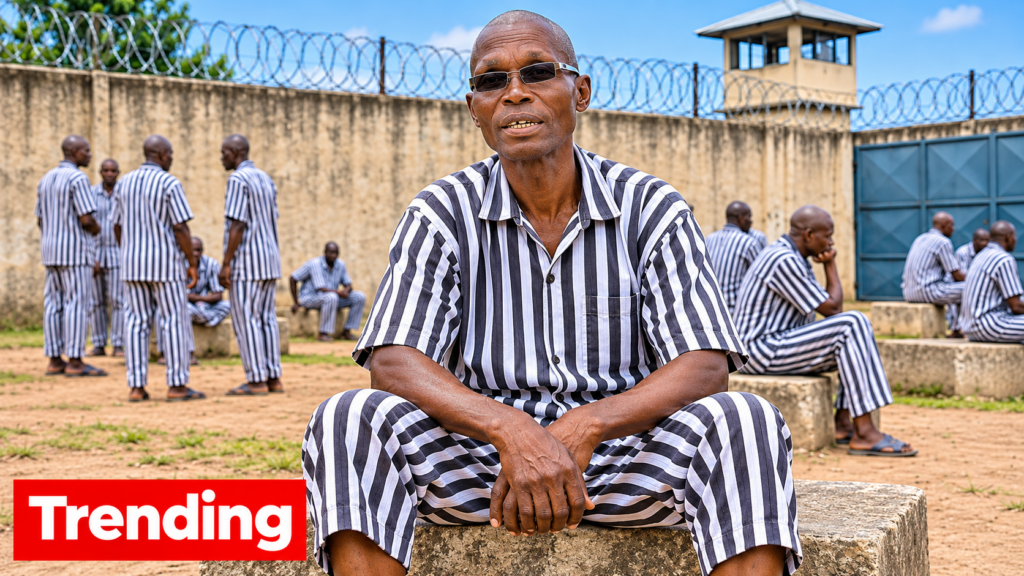
He once held human brains in his hands, performing delicate operations where a single mistake could mean death. His surgical expertise saved lives, his academic qualifications commanded respect, and his career at Kenyatta National Hospital placed him among Kenya’s accomplished medical professionals.
But for Dr. Clement Munyao Katiku, the journey from the operating theatre to Kamiti Maximum Security Prison allegedly began with an innocent purchase worth just KSh 2,000. A second-hand mobile phone, bought for his daughter, would become the centrepiece of a murder prosecution, a death sentence and an extraordinary personal tragedy. The surgeon who once fought death with a scalpel was suddenly fighting for his own survival.
The Dead Man’s Phone: A Bargain Concealing a Murderous Secret
Around 2005, Katiku purchased an ordinary second-hand mobile phone from a mortuary attendant he knew at Kenyatta National Hospital. His daughter, then studying at Moi University, needed a telephone to communicate with family and friends. He bought it without suspicion, handed it over and continued with his medical responsibilities. His daughter subsequently passed the handset to her boyfriend. Nobody imagined that the device carried a connection to a brutal murder.
The telephone had reportedly belonged to Moses Gituma, a senior Central Bank of Kenya official who had been robbed and murdered. Gituma was also the brother of Mathew Iteere, who would later become Kenya’s Commissioner of Police. During the robbery, the killers allegedly disappeared with his belongings, including the mobile phone. Through a mysterious succession of transactions, the handset eventually reached the hospital mortuary attendant before finding its way into Katiku’s household.
When detectives investigating Gituma’s murder traced the telephone, they reportedly arrested the daughter’s boyfriend. He identified Katiku’s daughter, who directed investigators to her father. The respected neurosurgeon suddenly found himself confronting a criminal investigation with terrifying implications. He explained the purchase, identified the seller and maintained that he knew nothing about the murder. But his explanation did not end the investigation. Instead, the transaction became entangled in an escalating judicial catastrophe.
From the Surgeon’s Scalpel to the Hangman’s Noose
Katiku was an accomplished medical professional whose academic journey began with a medical degree from the University of Nairobi in 1980. He pursued postgraduate qualifications in 1987 and further forensic medicine studies in Scotland in 1991. His professional existence revolved around scientific precision, medical evidence and saving lives. Yet the surgeon now faced an accusation threatening to obliterate everything he had spent decades building.
Prosecutors linked him to Gituma’s murder through the recovered telephone and the circumstances surrounding its possession. Katiku maintains that no eyewitness placed him at the crime scene, no confession implicated him and no direct forensic evidence established his participation. He insists that investigators failed to adequately pursue the mortuary attendant who supplied the handset. Nevertheless, the prosecution secured a conviction, and in 2009 he was sentenced to 30 years in prison.
Believing that a higher court would recognise what he considered a miscarriage of justice, Katiku appealed. What followed was devastating. According to his account, the appeal resulted in his sentence being enhanced to death. A man who had devoted his career to rescuing people from death was now confronting execution. The irony was almost Shakespearean: a healer facing the hangman’s noose for a murder he insists he never committed. His death sentence was subsequently commuted to life imprisonment, but his freedom remained buried behind prison walls.
The Doctor of Kamiti: A Destroyed Career and an Unresolved Mystery
Behind the formidable walls of Kamiti Maximum Security Prison, Katiku reportedly continues helping people survive. He assists sick prisoners, provides medical guidance and has trained as a paralegal to help fellow inmates navigate complex legal proceedings. The man who once performed intricate brain operations now spends his days helping prisoners with ailments and legal problems while his own struggle for freedom remains unresolved.
His story raises disturbing questions about circumstantial evidence, possession of stolen property and the possibility of wrongful convictions. Katiku’s insistence on innocence does not overturn the court’s findings, but his account invites scrutiny. What became of the mortuary attendant who allegedly sold him the phone? How did the handset travel from a murder victim into the second-hand market? And what evidence ultimately persuaded the courts that the surgeon was responsible?
The phone cost just KSh 2,000. The consequences consumed his career, liberty and family life. Somewhere inside Kamiti, a former brain surgeon continues insisting that his greatest mistake was not taking a human life, but buying a dead man’s telephone. The courts convicted him. He maintains his innocence. And one haunting question remains: did that cheap handset expose a murderer, or did it help destroy an innocent man’s life?